Is Rinoa Ultimecia? Of all the Final Fantasy fan theories that have circulated over the years, this is the one that has haunted Final Fantasy VIII fans for more than two decades. It has become so persistent that for many players it feels as integral to the story as the official lore, and on the surface, the idea that the hero’s love interest and the game’s ultimate villain could be the same woman seems almost obvious.
So let’s give this theory its best day in court. First I will build the strongest possible case for Rinoa and Ultimecia being one and the same, and then I will put that case to the test against the game and its official source material.
How Sorceresses Work in FF8
In Final Fantasy VIII, sorceresses are women gifted with extremely powerful magic. That power can be passed from one to another, either at death or willingly, and always to another woman. Sorceresses live normal human lifespans and can be killed, but if one inherits power from several sorceresses, it stacks, and her strength becomes extreme. Throughout the world’s history sorceresses have been feared and hunted, occasionally worshipped, but mostly caught in a cycle of persecution. That cycle matters for this theory.

Who Is Rinoa?
Rinoa Heartilly starts the game as a leader of a small resistance group called the Forest Owls. She meets Squall during one of their missions and quickly becomes the most central part of his life. Her fate changes when she inherits Edea’s powers and becomes a sorceress herself. Almost immediately she is targeted by Esthar and manipulated by Ultimecia, but she now has Squall at her side to protect her no matter what. Her sorceress form is marked by white, angelic wings. Keep that in mind, because the imagery becomes important when we compare her to Ultimecia.

Who Is Ultimecia?
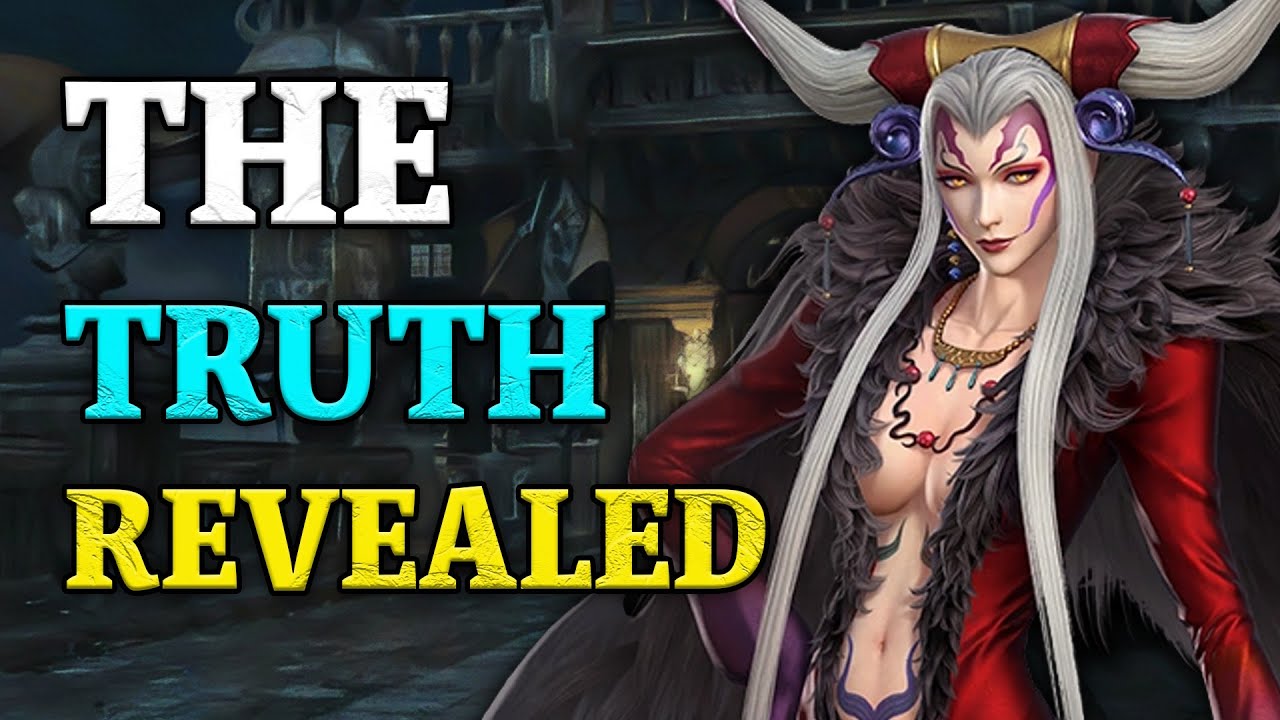
We actually know very little about Ultimecia. She comes from the future, she has incredible power and is greatly feared, and she uses a machine to send her consciousness back in time and implant it in sorceresses of the past, such as Edea and Rinoa. That lets her control them to carry out her master plan: Time Compression. If she can merge every era into a single moment, she can rule over everything and live forever. Her appearance is dark and imposing, with black demonic wings, a stark visual contrast to Rinoa’s white ones.

The technology behind this has its own history. Before the main game, Sorceress Adel ruled from Esthar and kidnapped children from around the world looking for an heir to her powers. Among them she found Ellone, a girl with the unique ability to send a person’s consciousness into another time. After Adel’s fall, Dr. Odine studied Ellone’s power and built a machine that does the same thing with a twist. Ellone can only send someone back as an observer, but the machine lets that consciousness take control of the person it is implanted in. That is how Ultimecia possesses Edea and Rinoa, and why Ellone is the unseen thread that ties the whole story together.

The Case for Rinoa Being Ultimecia
There are several arguments in favour of the theory. None is convincing on its own, but together they make an impressive cumulative case.
Visual continuity. Rinoa and Ultimecia look strikingly similar, with similar facial features and builds, and supporters argue that this is more pronounced than with any other characters in the game. Their sorceress forms mirror each other too: Rinoa’s angelic white wings against Ultimecia’s demonic black ones, which supporters read as the same woman at two points in her life, with light turning to dark as she becomes corrupted.

The same wish to control time. Ultimecia wants to compress time into a single moment, and Rinoa tells Squall almost the same thing, that she does not want the future and wishes the present could stand still so they could stay together forever. Ultimecia’s goal is far more twisted, but supporters ask whether it is simply Rinoa’s innocent wish, corrupted over a very long time.

Ultimecia’s unexplained power. It is canon that Ultimecia is the most powerful sorceress who ever lived, but the game never explains why. The theory’s answer is that Rinoa inherited Edea’s power, and very likely Adel’s later on, two of the most formidable sorceresses in history, then kept accumulating more over the decades and centuries.
Her hatred of SeeD. Ultimecia despises SeeD and calls Squall the legendary SeeD destined to destroy her. Rinoa herself fears being hunted by SeeD if she ever becomes a feared sorceress. If she came to feel Squall had failed to protect her, that betrayal and grief could grow into deep hatred, which would make Ultimecia’s hatred of SeeD personal rather than political.
Forgotten memories, lingering feelings. Guardian Forces cause memory loss, and the prime example is that the main party grew up together in the same orphanage and forgot all about it. Supporters argue that even if memories fade, strong emotions persist in the subconscious, so even an Ultimecia who had forgotten her life as Rinoa could still be driven by its emotional scars.

Griever. This is the argument people find most compelling. Griever is the lion on Squall’s ring, a name he invented himself. Yet in the final battle, Ultimecia summons Griever as the ultimate Guardian Force and even junctions herself to it. Why would she have any connection to something Squall made up? Squall showed his ring to one person and talked to her about it: Rinoa. She loved the symbol and said she would like to be like a lion one day. If Ultimecia is Rinoa, summoning Griever is a symbol of their shared past and her lingering feelings for the man she once loved. Some go further and argue she turned Squall himself into Griever so she could keep him forever.


Put together, the case says Rinoa’s light and Ultimecia’s dark are two sides of the same coin, with Ultimecia as the inevitable end of Rinoa’s tragic story. On the surface it gives the theory a lot of credibility. But dig into each point and many of them fall apart quickly.
Putting the Theory to the Test
The visual similarity is art direction. The resemblance is not unique to Rinoa and Ultimecia. FF8 has a consistent art style, and many of its characters look remarkably alike. The light and dark wings are thematic imagery, not a literal marker. A sorceress’s form reflects her persona: Rinoa’s is purity, so her wings are angelic, while Ultimecia’s reflects her malevolence. That is visual storytelling, not proof of identity.
Wanting time to stand still is just what people in love say. When Rinoa says she wishes she could freeze time and stay with Squall forever, she is expressing a moment of extreme happiness, the kind of thing anyone might say. Ultimecia’s Time Compression is a literal, strategic and destructive plan to bring all of existence under her control. Similar wording in completely different contexts is a weak link.

Ultimecia’s power does not need Rinoa. Ultimecia lives far in the future, and sorceresses have normal lifespans, so by her time she would have inherited power from many generations of sorceresses. Centuries of succession explain her strength perfectly well without her having to be Rinoa.
Her hatred of SeeD comes from her own era. In Ultimecia’s time, SeeD is the organisation constantly hunting her, long after Rinoa’s timeline. The legendary SeeD prophecy does refer to Squall, and he is the one who defeats her, but nothing suggests a personal betrayal. Her animosity comes from the persecution of her own era, not from the SeeD members Rinoa knew.
The lingering emotions idea is speculation. The game never says that emotional scars survive Guardian Force memory loss. It might seem plausible, but it is not canon.
Griever is explained officially. The Japanese Ultimania clarifies that Ultimecia drew Griever from Squall’s mind during that battle. She wanted to create the most powerful being imaginable, and in Squall’s mind that was Griever, so she pulled it out as a psychological weapon in the moment. She did not need to know about it beforehand. As for the idea that she turned Squall into Griever, there is no in-game or supplementary evidence for it, and nothing to suggest sorceresses can turn people into Guardian Forces at all.

The story is stronger with them apart. Rinoa represents hope, love and resisting corruption, and Ultimecia embodies corruption, isolation and surrender to power. They do not have to be two ends of the same journey. In fact, the narrative works better when they are separate, because only then can Rinoa prove that becoming a sorceress does not inevitably lead to Ultimecia’s fate.

Final Verdict: Is Rinoa Ultimecia?
Tested against the timeline, the rules of sorceresses and the supplementary material, the pieces simply do not fit. Every connection in support of the theory can be explained just as easily without Rinoa being Ultimecia. And yet the theory endures, because it is emotionally powerful. It turns the game’s love story into something more complex that ends in inevitable tragedy, and for some fans that is as engaging as anything in the official lore.
I try to stick as closely to the canon as possible, so I believe Rinoa and Ultimecia are not the same person. But the game leaves just enough mystery that I could be wrong. If you enjoy FF8’s darker theories, read why the Squall is dead theory refuses to die, and if you are heading back into the game, my guide to getting overpowered early in FF8 will make the trip to Ultimecia’s castle a lot easier.

Do you think Rinoa’s destiny lies a little deeper in the shadows, or is this just a fascinating theory with no bearing on the real story? Let me know in the comments on the YouTube video.